


Beneath our seas lie a diverse array of seabed habitats shaped by physical and biological processes. To operate sustainably, it is essential for our marine industry partners to understand the seabed habitats their work interacts with, and a critical part of building this knowledge is habitat mapping.
At Ocean Ecology we use state-of-the art techniques to deliver accurate and efficient seabed habitat mapping solutions.
Why habitat mapping matters
Unlike terrestrial habitats that can be photographed from the air or space, marine habitats can often only be observed with close-range imagery from a seabed camera or by collecting samples of sediment with a grab. To build up a complete seabed map, these fine-scale observations can be used to interpret patterns in broad-scale data from other sources, like bathymetry from acoustic sensors.
Seabed habitat mapping has long relied on manual interpretation, with experts examining all the available data and using their experience to meticulously identify regions of different habitats. However, advances in sensor technology and processing methods now mean that some of the more time-consuming stages can be achieved more efficiently and effectively with automation.
Harnessing machine learning for mapping
We work with clients to develop bespoke semi-automated seabed mapping solutions for a wide range of projects to produce accurate results and accelerate reporting timeframes. We apply advanced machine learning models, such as Random Forest and XGBoost, to detect complex patterns in acoustic, visual and environmental datasets that are beyond the capabilities of human interpretation.
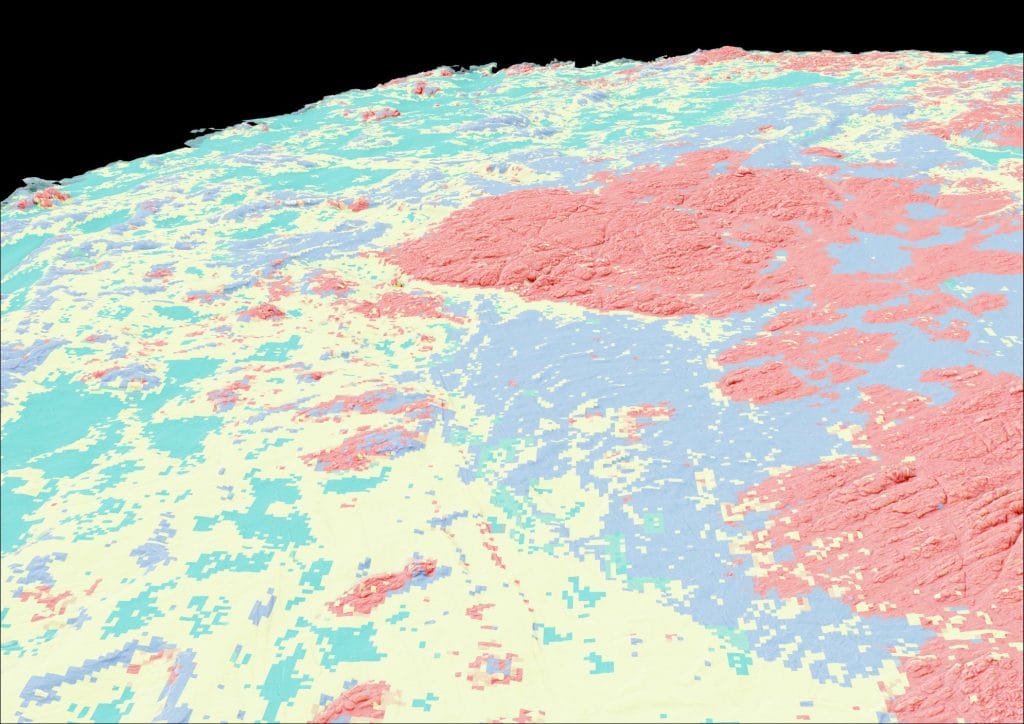
As we continue to advance at the cutting edge of technology, we are incorporating deep learning methods into our mapping processes. With machine-learning-driven approaches, we can rapidly produce statistically robust habitat predictions across large areas of seabed, for quantified, repeatable results. Expert interpretation remains essential to tune and supervise the modelling process, ensuring the final map products are of the highest quality and confidence.
Our advanced seabed mapping and modelling techniques support a broad range of our services including environmental baseline surveys, habitat assessments, site characterisation and monitoring. In recent months we have employed these methods to improve and accelerate deliverables in both subtidal and intertidal habitat mapping for projects including offshore windfarms, undersea cables and pipelines, and marine protected area assessments.
Real-World Impact: Subsea Cable Case Study
A recent project in which we were tasked with mapping habitats for a proposed subsea cable demonstrates the benefits of our semi-automated mapping routines.
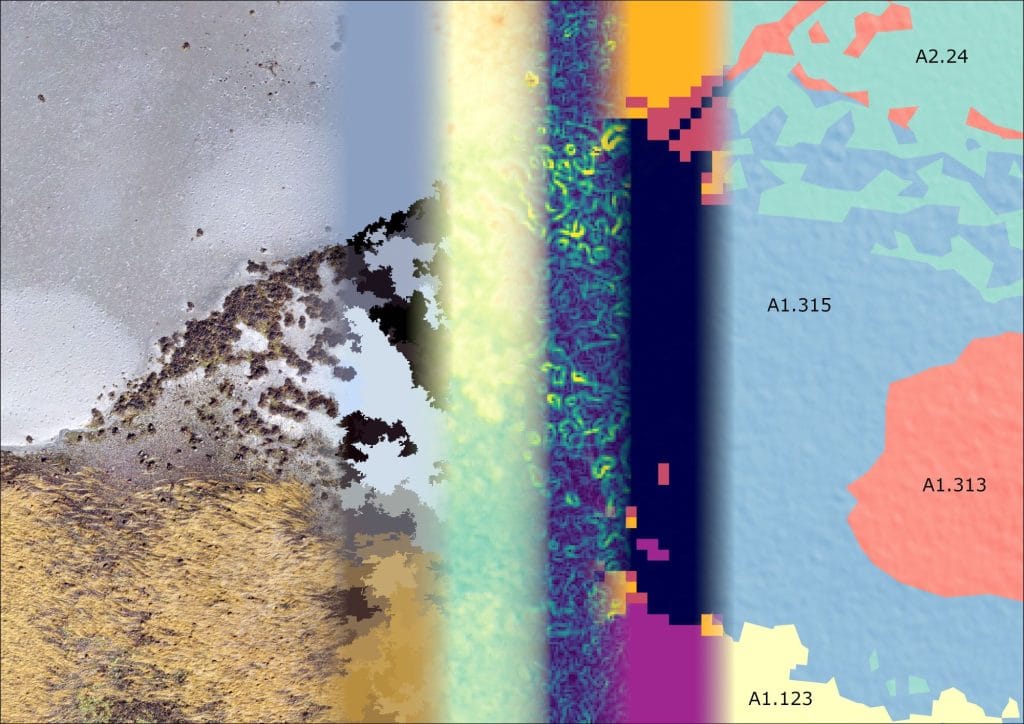
The study area encompassed both subtidal and intertidal zones, featuring a complex mosaic of substrates and habitats – including some protected under conservation legislation.
We used object based image analysis and XGBoost models to rapidly predict the spatial distribution of habitats by integrating acoustic, drone and in-situ sampling data. After generating modelled predictions, habitat mapping specialists used the results as a basis for a quality-controlled interpretation and GIS specialists generated a set of final map products. The process proved to be highly efficient and effective compared to a traditional approach of manually digitising all individual habitat boundaries.


